Skateboarding
A skateboard that responds to the ground beneath it.
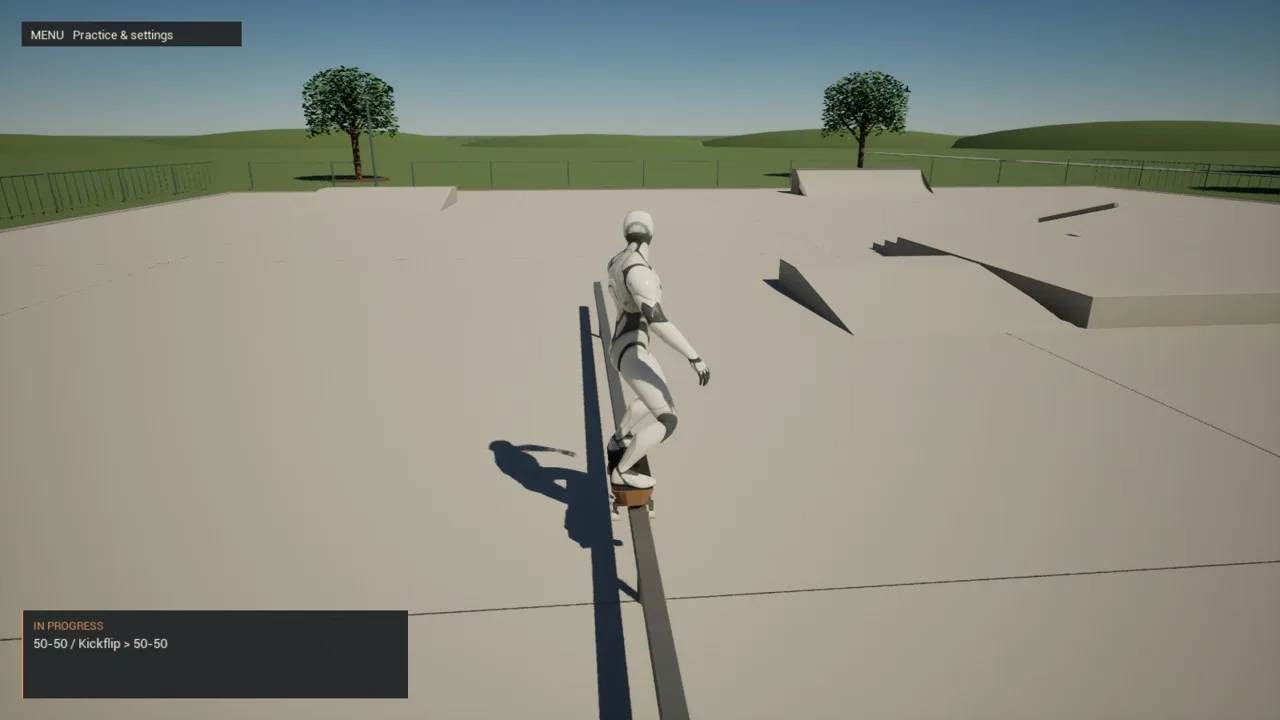
The project
A single-player skateboarding game built around a simulated board, gesture-driven tricks and physical contact with a practice park.
A playable practice build combines tricks, challenges and repeatable tuning exercises.
What had to change
Make pushing, tricks, landings and rail contact feel connected while keeping the board physically simulated.
How it was shaped
C++ components separate board physics, input recognition, rider presentation, tricks, manuals and grinds. Virtual suspension and wheel contacts interact with the Unreal Chaos simulation.
What it delivered
A playable practice build combines tricks, challenges and repeatable tuning exercises.
Inside the project
The board uses a simulated body with virtual suspension, wheel contacts, steering and braking. The rider presentation includes procedural balance and foot placement, with an explicit bail and reset.
Stick gestures feed trick recognition; dedicated systems handle ollies, flips, manuals, grinds and landings. A practice park provides rails, ledges and transitions for testing connected sequences.
Practice starts, handling profiles and a feel lab support repeatable tuning. The source includes automated checks for input, tricks, manuals, grinds and challenge behavior.
A single-player Unreal Engine project with a Windows playtest build. The images show its development environment and template character.